
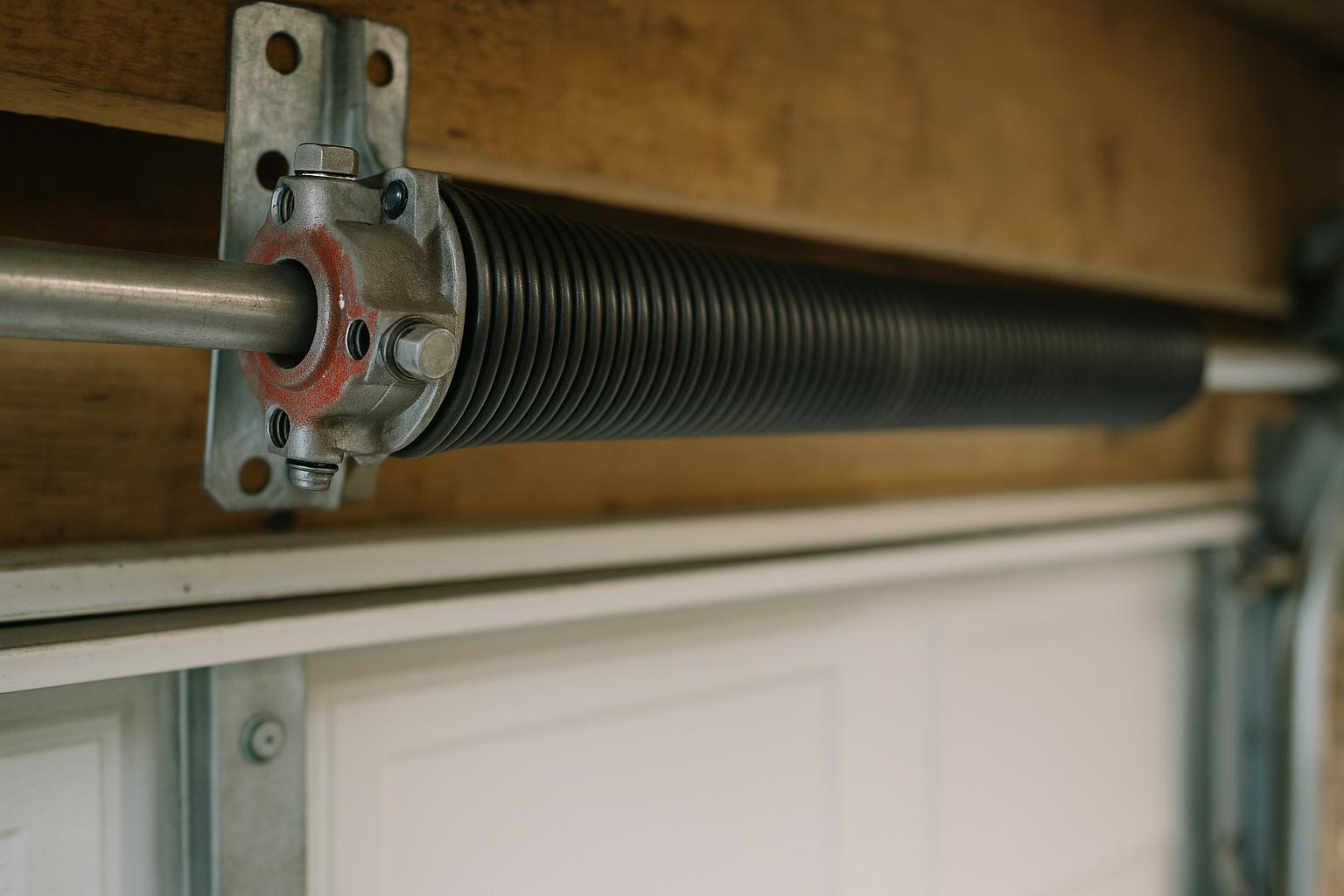
Your Garage Door Springs Are Trying to Tell You Something
Of all the components in your garage door system, the springs do the heaviest lifting — literally. They bear the full weight of the door every time it opens and closes, and over the years, that constant tension takes a toll. Most torsion springs are rated for about 10,000 cycles, which translates to roughly seven to ten years of average use.
The good news is that springs almost never fail without warning. If you know what to look for, you can catch the problem early, schedule a replacement on your terms, and avoid the frustration of being locked out of your garage on a busy Santa Monica morning.
How Garage Door Springs Work
Before we get into the warning signs, it helps to understand what your springs actually do. There are two main types:
- Torsion springs — Mounted on a metal shaft above the door opening. They wind and unwind to lift and lower the door in a controlled motion. Most modern residential doors in Santa Monica use this type.
- Extension springs — Mounted along the horizontal tracks on either side of the door. They stretch and contract to provide lifting force. These are more common on older installations.
Both types store a tremendous amount of energy. That's why spring replacement is one of the most dangerous garage door repairs and should always be handled by a trained technician.
7 Warning Signs Your Springs Are Failing
1. The Door Feels Heavier Than Usual
Try this simple test: pull the emergency release handle to disconnect the opener, then manually lift the door about halfway. A properly balanced door should stay in place on its own. If it feels unusually heavy, slides back down, or requires real effort to lift, your springs are losing tension and nearing the end of their lifespan.
2. The Door Opens Unevenly or Crooked
If one side of your garage door rises faster than the other, it often means one spring has weakened more than its counterpart. This imbalance puts extra stress on the opener, the tracks, and the remaining spring — accelerating wear across the entire system.
3. You Hear a Loud Bang from the Garage
Many homeowners in Santa Monica have told us they heard what sounded like a gunshot or a car backfiring coming from the garage. That sound is almost always a torsion spring snapping. The coiled metal unwinds violently when it breaks, releasing all its stored energy at once. If you hear this, don't try to operate the door. Call a professional right away.
4. There's a Visible Gap in the Spring
Take a look at the torsion spring above your door. An intact spring is a continuous, tightly wound coil. If you see a gap — a section where the coils have separated — the spring has already broken. Even if the door still moves, operating it in this condition is unsafe and can damage your opener.
5. The Opener Struggles or Strains
Your garage door opener is designed to guide the door, not to lift its full weight. When springs weaken, the opener has to compensate by working harder. You might notice the motor running louder, the door moving more slowly, or the opener stopping partway through a cycle. Left unchecked, this extra strain can burn out the opener motor entirely — turning a spring replacement into a much more expensive repair.
6. Cables Are Loose or Hanging
The lifting cables on your garage door are connected to the springs. When a spring breaks, the cables often lose tension and may hang loosely or come off the drum entirely. Loose cables are a clear sign that something has gone wrong with the spring system and the door should not be operated until it's inspected.
7. The Door Closes Too Fast
Springs control the speed at which your door descends. When they lose tension or break, the door can slam shut much faster than normal. This is a serious safety hazard, especially in homes with children or pets. If your door drops quickly when closing, have the springs inspected immediately.
Why You Shouldn't Wait
It's tempting to put off a spring replacement, especially if the door still technically works. But operating a garage door with failing springs creates a chain reaction of problems:
- Opener damage — The motor works overtime to compensate, shortening its lifespan.
- Track and roller wear — An unbalanced door puts uneven pressure on the tracks, causing premature wear and misalignment.
- Safety risks — A door with broken or weak springs can drop unexpectedly, posing a real danger to anyone standing underneath.
- Getting stranded — A fully broken spring usually means the door won't open at all, which can trap your car inside or leave your garage unsecured.
Replacing springs proactively is faster, safer, and often less expensive than dealing with the collateral damage caused by waiting too long.
Can You Replace Garage Door Springs Yourself?
We strongly advise against it. Garage door springs are under extreme tension, and improper handling can cause serious injury. Professional technicians have the specialized tools, training, and experience to replace springs safely. They'll also ensure the new springs are properly sized and calibrated for your specific door, which is critical for balanced operation and longevity.
What to Expect During a Spring Replacement
When you call us for a spring replacement in Santa Monica, here's what the process typically looks like:
- Inspection — We examine the springs, cables, drums, and overall door balance to assess the full scope of the issue.
- Spring selection — We match the replacement springs to your door's weight, height, and track configuration. We carry a wide range of springs on our trucks, so most replacements can be completed in a single visit.
- Installation — We safely remove the old springs and install the new ones, then wind them to the correct tension.
- Testing and adjustment — We test the door through several full cycles, check the balance, and adjust the opener settings as needed.
- Safety check — We inspect the safety reversal system, lubricate moving parts, and make sure everything is operating smoothly before we leave.
The entire process usually takes about an hour, and most homeowners across Santa Monica, Brentwood, Pacific Palisades, and the surrounding Westside communities are back to normal the same day.
Don't Ignore the Warning Signs
Your garage door springs work hard every single day, and they won't last forever. By paying attention to the signs we've outlined — a heavy door, unusual noises, visible gaps, or a struggling opener — you can catch the problem early and avoid a much bigger headache down the road.
If you've noticed any of these warning signs, Santa Monica Garage Door is here to help. We offer fast, professional spring replacement with upfront pricing and no surprises. Give us a call, and we'll get your door back in balance.