
Your Garage Door Shouldn't Sound Like That
You press the button, and instead of the smooth hum you're used to, your garage door greets you with a symphony of grinding, squealing, or banging. If you're a homeowner in Santa Monica, you probably use your garage door multiple times a day — and when it starts making unusual noises, it's hard to ignore.
The good news is that most garage door noises point to identifiable, fixable problems. The bad news is that ignoring them usually makes things worse — and more expensive. In this guide, we'll walk you through the most common garage door sounds, what causes them, and what you should do about each one.
Grinding or Scraping Sounds
A grinding or scraping noise is one of the most common complaints we hear from homeowners across Santa Monica and the Westside. This sound typically points to one of a few issues:
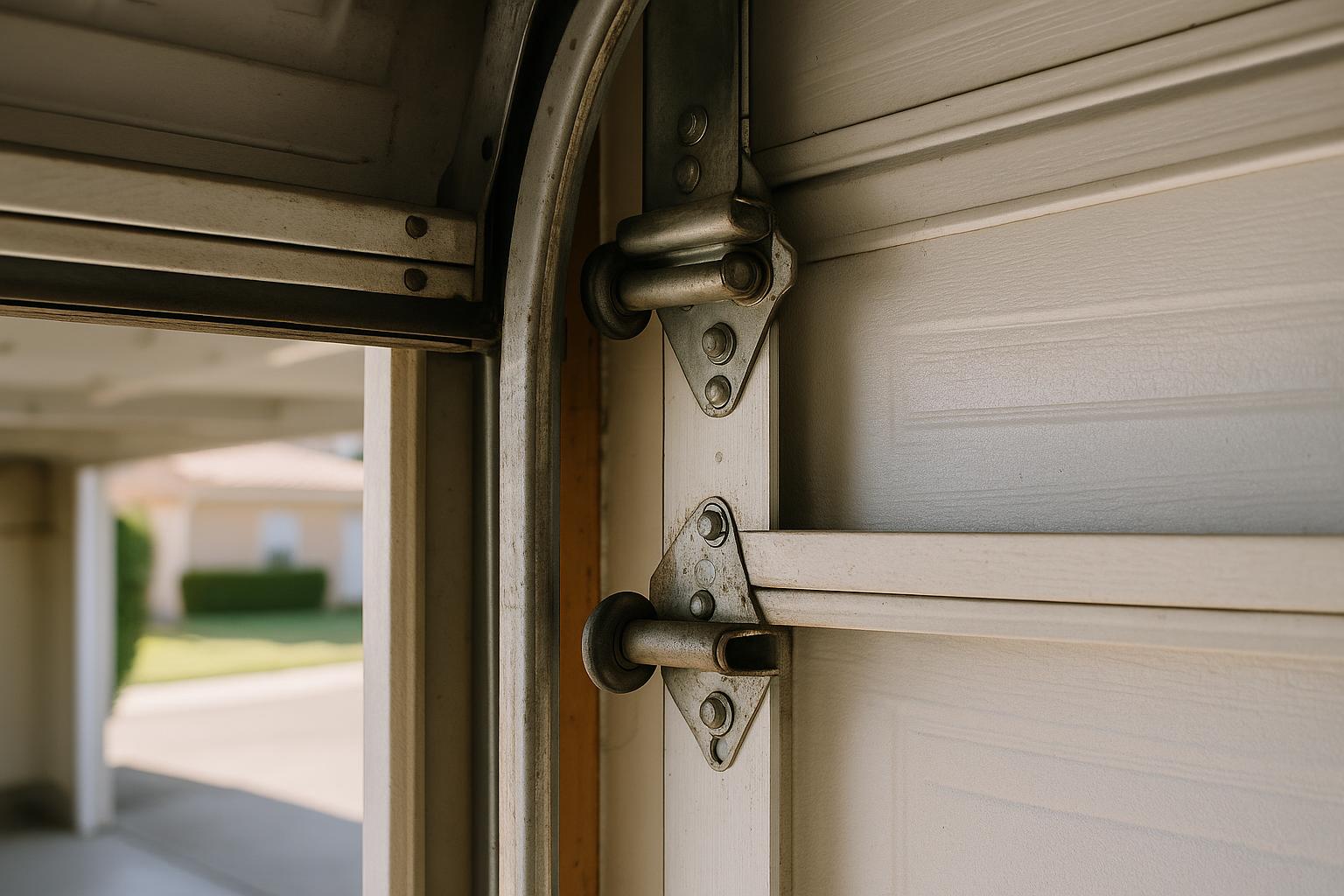
- Worn rollers: Metal rollers wear down over time, and when they lose their smooth surface, they grind against the track. Nylon rollers are quieter and last longer, making them a popular upgrade for homes in residential neighborhoods like Brentwood and Pacific Palisades where noise matters.
- Misaligned tracks: If the vertical or horizontal tracks have shifted even slightly, the door panels can scrape against the metal as they move. This creates a harsh grinding sound and, if left uncorrected, can cause serious damage to both the tracks and the door itself.
- Lack of lubrication: Dry metal-on-metal contact is never good. When hinges, rollers, and bearings aren't properly lubricated, friction increases and produces that unmistakable grinding noise.
If you hear grinding, start by visually inspecting the tracks for obvious bends or gaps. But for anything beyond a simple lubrication fix, it's best to have a professional take a look before the problem escalates.
Squealing or Squeaking Sounds
A high-pitched squeal every time your garage door opens or closes is more than just annoying — it's a warning sign. Here's what's usually behind it:
- Dry or rusted springs: Your torsion or extension springs do the heavy lifting every time the door moves. When they dry out or develop rust, they squeal under the strain. Regular lubrication with a silicone-based spray can help, but springs under excessive wear need professional attention.
- Worn weather stripping: Sometimes the squeal isn't mechanical at all. Old, hardened weather stripping along the sides or bottom of the door can drag and squeak against the door or floor as it moves.
- Bearing issues: The bearings in your rollers and at the end of the torsion spring shaft can wear out, producing a persistent squeak that gets louder over time.
Many Santa Monica homeowners try to solve squeaking with a can of WD-40, but that's actually a short-term fix at best. WD-40 is a solvent, not a long-term lubricant. A proper garage door lubricant designed for the application will last much longer and actually protect the components.
Rattling or Vibrating Sounds
Rattling is often the easiest noise to diagnose — and sometimes the easiest to fix. Common causes include:
- Loose hardware: The nuts, bolts, and screws that hold your garage door system together can loosen over time due to the constant vibration of daily use. A simple tightening with a socket wrench can sometimes eliminate the rattle entirely.
- Loose chain or belt: If your garage door opener uses a chain drive, a loose chain will slap and rattle during operation. Belt-drive openers can develop a similar issue if the belt stretches or loosens.
- Unsecured opener: The opener unit itself is mounted to your garage ceiling, and if the mounting brackets or supports have loosened, the entire unit can vibrate and rattle when running.
While tightening a few bolts is a reasonable DIY task, be cautious about adjusting the chain tension or opener mounting on your own. Incorrect tension can damage the opener motor, and an improperly secured opener is a safety hazard.
Banging or Popping Sounds
A sudden bang or pop from your garage door is startling — and for good reason. These sounds often indicate a more serious problem:
- Torsion spring issues: A loud bang that happens while the door is in motion could mean a spring is under uneven tension or is close to failure. If you hear a single, explosive bang while the door is stationary, a spring may have already broken. Do not attempt to operate the door if you suspect a broken spring.
- Panel problems: Warped or damaged panels can pop or bang as they pass through sections of the track where the fit is too tight. This is especially common with older wooden garage doors in areas like Venice and Mar Vista where coastal moisture can cause wood to swell.
- Opener gear issues: A popping sound from the opener unit itself can indicate stripped or worn gears inside the motor housing. This usually means the opener is struggling to lift the door and the internal gears are slipping.
Banging and popping sounds should never be ignored. They often signal problems that can lead to a complete door failure or, worse, a safety incident.
Humming Without Movement
If your garage door opener hums or buzzes but the door doesn't move, the motor is running but the drive mechanism isn't engaging. This can happen when:
- The door is locked or obstructed: Check that the manual lock isn't engaged and that nothing is blocking the door's path.
- The motor gear is stripped: Internal plastic or nylon gears in the opener can strip over time, especially if the door is heavy or the springs aren't providing adequate counterbalance.
- The capacitor is failing: The capacitor gives the motor the initial jolt of power it needs to start. A failing capacitor can leave the motor humming without enough power to turn the drive.
A humming opener that isn't moving the door is working hard for nothing, and running it repeatedly in this state can burn out the motor entirely.
When to DIY and When to Call a Pro
Some noise-related fixes are safe and simple for homeowners to handle:
- Lubricating hinges, rollers, springs, and tracks with a garage door-specific lubricant
- Tightening loose nuts, bolts, and screws on the door and track hardware
- Replacing worn weather stripping
However, you should call a professional for:
- Any work involving springs — torsion springs are under extreme tension and can cause serious injury
- Track realignment or replacement
- Opener motor or gear repairs
- Panel replacement or structural adjustments
Keep Your Garage Door Quiet and Reliable
Strange noises are your garage door's way of asking for help. Addressing them early almost always saves money and prevents the inconvenience of a door that stops working when you need it most. If your garage door has started making sounds that concern you, don't wait for a small problem to become a big one.
At Santa Monica Garage Door, we help homeowners and businesses across Santa Monica, Culver City, Pacific Palisades, and the surrounding Westside communities diagnose and fix noisy garage doors every day. Whether it's a quick lubrication service or a full roller and track overhaul, we'll get your door running quietly and reliably again. Give us a call to schedule an inspection.